Choosing Synthetic Leather for Car Seats: A Manufacturer's View
Table of Contents
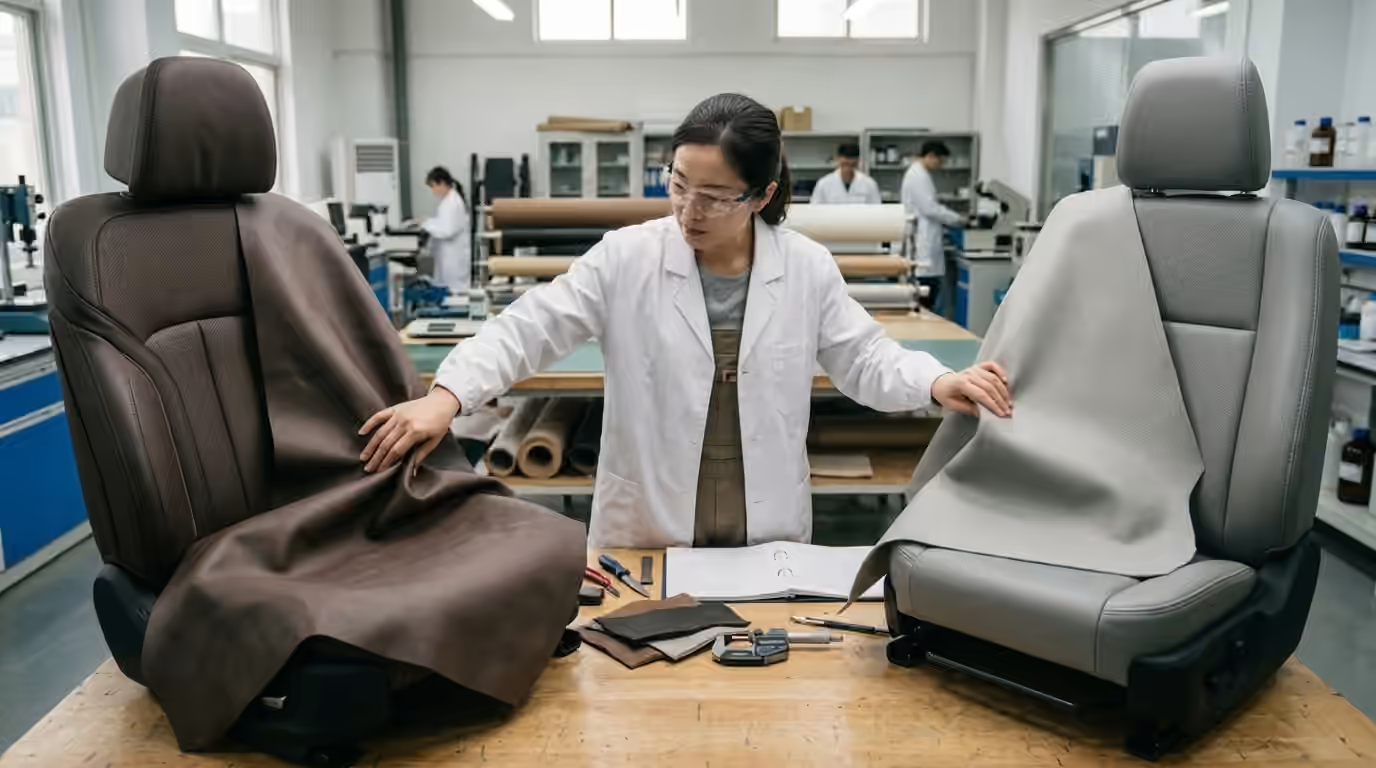
Quick Summary
For car seat synthetic leather, abrasion and scratch resistance is the baseline. Which material to use depends on the car's market position and how well it fits your production line. Selling into the US or Europe? Get environmental compliance sorted early. And whether all of this actually holds up in practice comes down to one thing: how reliable your supplier is.
Furniture makers and auto interior makers want completely different things. Furniture buyers mostly care about feel and looks. Car seat buyers ask straight away: how many abrasion cycles, does it crack in the cold? So today, let's flip the angle — if I were a buyer or process engineer at a car seat factory, here's what I'd check before picking a material.
Abrasion Resistance: A Baseline, Not a Bonus
Wear out a sofa cover, you just replace it. A car seat is different — getting in and out, seatbelts rubbing against it, sun exposure. After a few years, a material that can't take it becomes a real problem.
The industry standard test is Taber abrasion: a CS-10 wheel under a set weight, spun for a given number of cycles before the surface breaks. Supplier reports can look great on paper — but the safe move is testing the sample yourself, not just trusting the data sheet. One client once placed an order based purely on a supplier's report. Their own retest came back way off; it turned out the supplier had used a different weight and speed than the report claimed. You only feel sure once you've tested it yourself.
PU, PVC, or Silicone: Match the Material to the Car and Budget
PU leather feels soft, breathes well, and looks closest to real leather — but its abrasion resistance and durability are only average. PVC leather is highly abrasion-resistant, cheap, and can last 10+ years — strong value. Silicone leather combines good feel with strong abrasion resistance and also lasts 10+ years, with balanced performance overall — its only downside is price.
That sets each material's place: budget-conscious mass-market cars → PVC. Mid-range cars, where ride quality and a leather look matter more → PU, worth the extra cost. High-end cars, less price-sensitive and wanting both feel and durability → silicone.
| Comparison | PVC | PU | Silicone |
|---|---|---|---|
| Feel | ⭐⭐⭐☆☆ | ⭐⭐⭐⭐⭐ | ⭐⭐⭐⭐⭐ |
| Breathability | ⭐⭐⭐☆☆ | ⭐⭐⭐⭐⭐ | ⭐⭐⭐⭐⭐ |
| Hydrolysis resistance | ⭐⭐⭐⭐⭐ | ⭐⭐⭐☆☆ | ⭐⭐⭐⭐⭐ |
| Durability | ⭐⭐⭐⭐⭐ | ⭐⭐⭐☆☆ | ⭐⭐⭐⭐⭐ |
| Price | Slightly lower | Slightly higher | much higher |
| Best for | Mass-market cars | Mid-range cars | High-end cars |
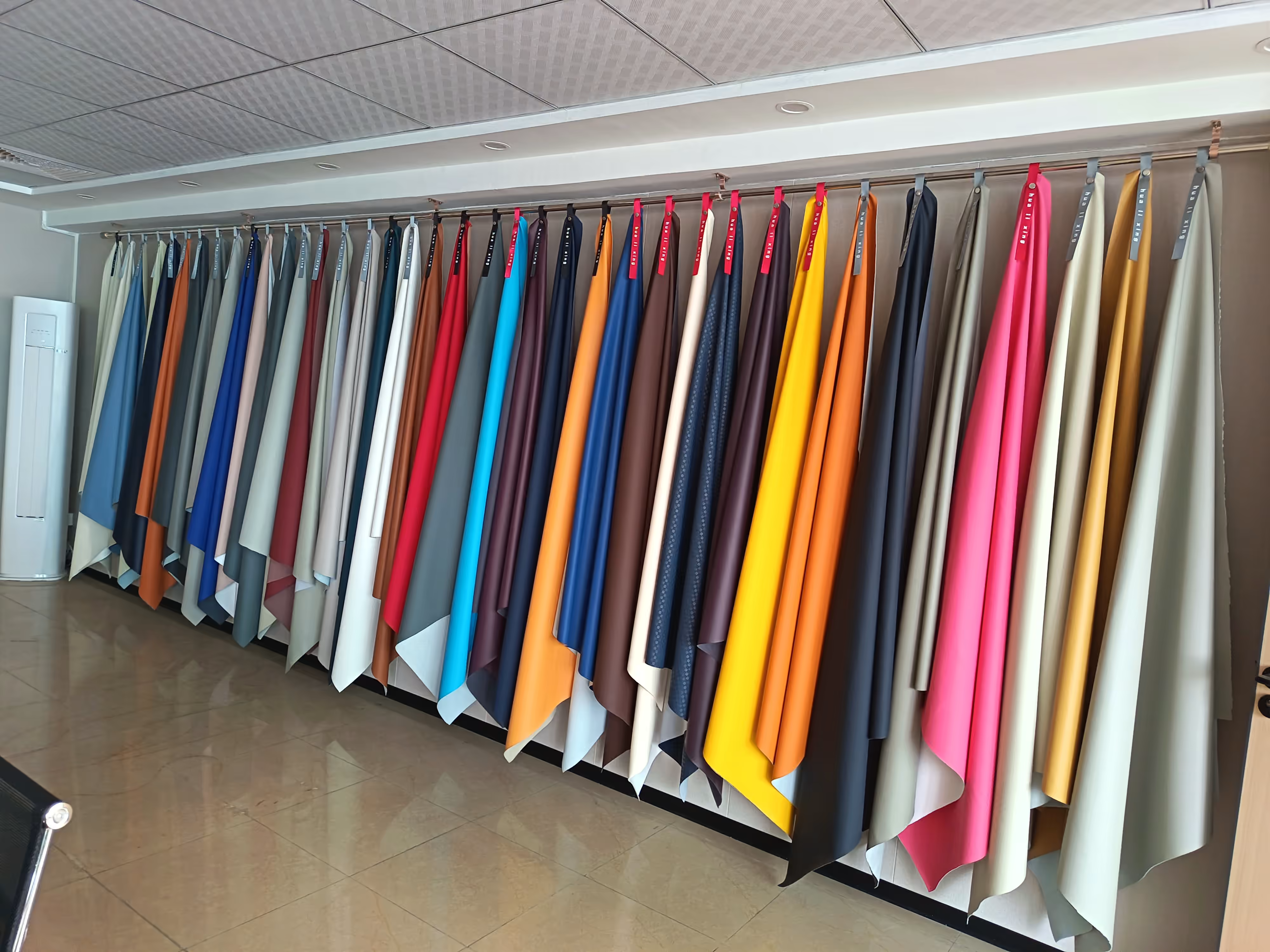
A Good-Looking Texture Is One Thing — Whether It Runs on the Line Is Another
Embossing depth and grain direction aren't just about looks. Too deep, and the needle slips or skips stitches. Grain misaligned with the cutting direction, and the pattern comes out crooked on bulk orders.
One client's design team once picked a heavily grained texture. It looked fine at sample stage — but once bulk production hit the automatic cutting machine, the deep texture threw off the machine's positioning sensor, and the scrap rate spiked. They ended up reworking the whole order with a shallower texture. Discussing production compatibility with your supplier up front saves a lot of trouble later.
Environmental and Safety Rules: Don't Leave Them Until Audit Time
In the US and Europe, cabin air quality rules keep tightening. VOC emissions and odor rating are requirements you can't skip — many automakers cap the odor rating internally. A supplier saying "it's eco-friendly" isn't enough; you need the test report. Selling into the EU? Also ask your supplier about REACH compliance.
Flame retardancy is another hard requirement — burn rate has to stay within the limit set by whichever regulation applies to your target market. In the US, that rule is FMVSS No. 302, which caps the burn rate at 102 mm per minute. Don't skip cold-crack testing either: in cold climates, seats cracking at low temperature is a common complaint, and the material has to fold without cracking in the cold. Buyers often miss this test — and by winter, it's too late to fix.
One more thing specific to PU: hydrolysis resistance. PU has a built-in weakness — left in hot, humid conditions too long, it hydrolyzes, and the surface turns sticky and cracks. This shows up especially in humid southern regions or cars exported to Southeast Asia. Using PU means always asking for hydrolysis test data, not just judging feel and looks at room temperature.
Same Spec Sheet, Very Different Results
The same technical spec can produce very different materials depending on the factory — a lesson many buyers learn the hard way. Uneven coating thickness means uneven wear. Weak interlayer bonding means bubbling and peeling over time. Loose process control means big differences batch to batch.
Part of the reason is immature processes at some factories. But the bigger reason is buyers who don't know real market pricing and push so hard for a lower price that the factory's margin disappears — so the factory cuts corners to survive.
Choosing a Supplier Really Means Choosing Reliability
For a long-term partnership, an honest, experienced wholesale manufacturer matters more than anything else. Price should never be the only factor — especially in an industry like automotive, where material consistency and long-term stability matter this much. Pick the wrong supplier, and what you pay for it later will far outweigh whatever you saved on the material.
Also ask about their quality system. Many carmakers and parts makers work under IATF 16949, the quality standard for the auto industry. Not every material supplier holds this certificate, and it is no guarantee. But it shows the factory takes process control seriously.
Final Note
The factory of Hualixing New Materials Co., Ltd. produces all kinds of faux leather for global buyers. If you are interested, please feel free to contact us.
FAQ
Which is better for car seats: PU, PVC or silicone leather?
It depends on the car and the budget. PVC is the best value for mass-market cars. PU feels closest to real leather, so it suits mid-range cars. Silicone gives you good feel and long life, so it fits high-end cars.
What is the Taber abrasion test?
It is a lab test for wear. A wheel rubs the surface under a set weight, and we count the cycles until the surface breaks. More cycles means a more wear-resistant material. ISO 5470-1 covers this test for coated fabrics.
Why does PU leather turn sticky and crack?
This is hydrolysis. Hot, humid air slowly breaks down the PU. First the surface turns sticky, then it cracks. If your cars go to humid markets, ask for hydrolysis test data before you order.
How can I make sure the bulk order matches the sample?
Keep a signed reference sample and ask for a test report on each batch. Test a piece from the bulk order yourself. If you can, run a small trial on your own cutting line first.
Get a Free Quote
Hualixing New Materials Co., Ltd. is a factory-direct synthetic leather manufacturer with 30 years of manufacturing experience, specializing in OEM/ODM services. We manufacture and supply PVC leather, PU leather, silicone leather & vegan leather for automotive, furniture, upholstery, marine and more. Custom orders are available by yard or meter. Tell us your needs, and we will respond within 24 hours.