How to Ship Synthetic Leather Worldwide What I've Learned Over the Years
Table of Contents
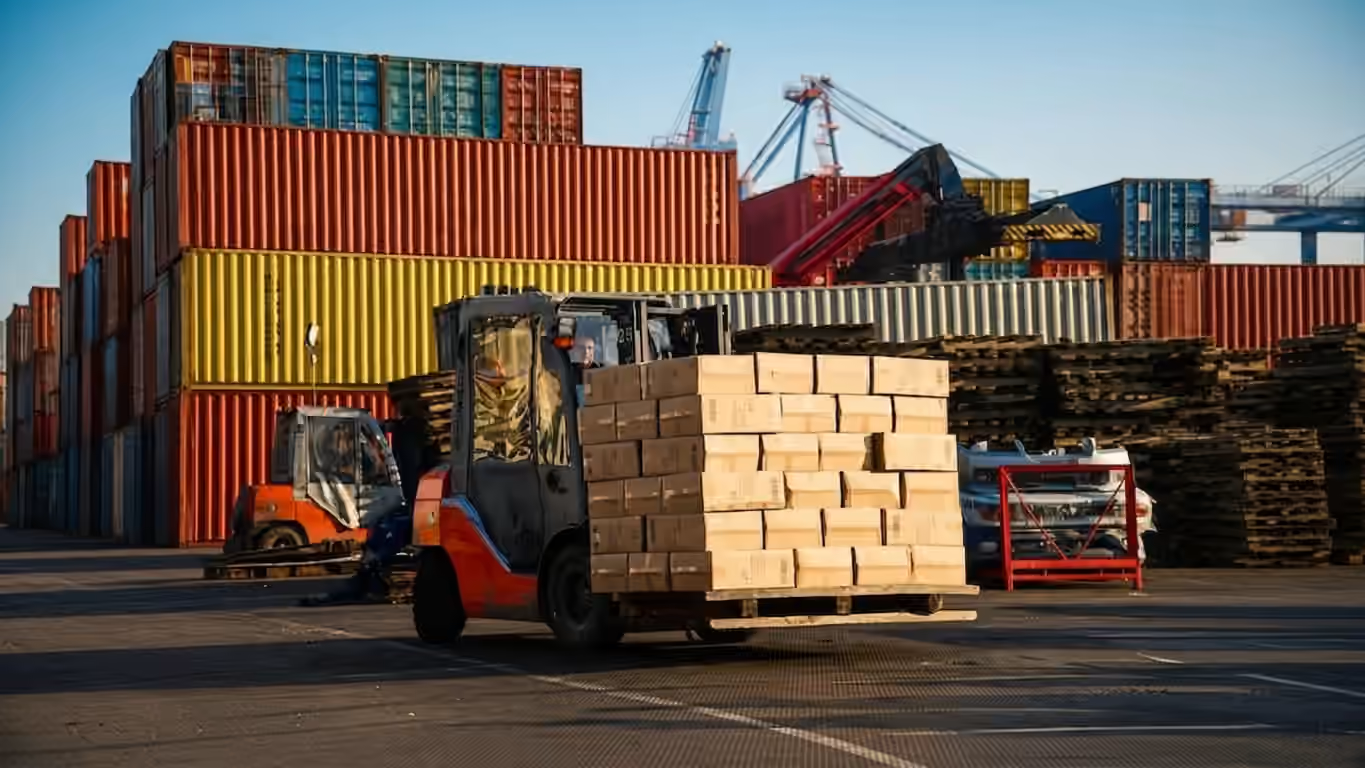
For large orders with no rush, sea freight is the cheapest way to ship synthetic leather, usually taking 15 to 40 days. If you're low on stock and need goods fast, air freight gets there in 3 to 7 days. Sample rolls should always go by courier — DHL, UPS, or FedEx — arriving in about 3 to 6 days. And for small test orders that don't fill a container, LCL (less-than-container-load) is the most cost-effective middle ground. Which one is right for you comes down to three things: order size, urgency, and budget.
That's the short version. Here's what I've learned shipping synthetic leather over the past couple of years — sea freight, air freight, courier, LCL — including a few problems I hit along the way so you don't have to repeat them.
For Large Orders, Go With Sea Freight — Don't Rule It Out Just Because It's Slow
Synthetic leather is heavy and bulky. A single roll can easily weigh several dozen kilograms, so air freight alone can eat up most of your profit margin. I once had a customer order a full container of PU leather but insist on air freight because sea freight took too long. In the end, the shipping cost came out higher than the value of the goods — even they regretted it afterward.
For large orders, sea freight is basically the only option that makes financial sense. Containers — 20-foot, 40-foot, or 40-foot high-cube — get loaded based on roll count and weight. It's not unusual to fit three or four hundred rolls into a 40-foot high-cube container, depending on the core length and material thickness. Full container loads (FCL) are also less hassle than LCL, since once the container is sealed, it typically isn't opened again until it reaches the destination — which also means less risk of damage in transit.
As for transit time, sea freight usually takes 15 to 40 days depending on the destination. Lately, shipments to Europe have taken longer because of tensions in the Red Sea — many vessels are now rerouting around the Cape of Good Hope, which adds a week or two. Make sure to flag this with customers ahead of time, so you're not fielding anxious follow-up messages later.
Air Freight Is for Emergencies — Don't Sweat the Extra Cost
Sea freight saves money, but it can't save you when you're racing against a deadline. One customer making sofas miscalculated their PU leather inventory and was about to shut down their production line. We rushed a batch out by air freight — the shipping cost was several times higher, but it was nothing compared to a week of lost production.
Air freight typically takes 3 to 7 days, which makes it a good fit for emergency restocking or small test-color and sample-batch shipments. For anything under a few hundred kilograms, the cost is manageable — and if the alternative is a shutdown, the extra shipping cost barely matters.
Samples Go by Courier — Speed Is the Whole Point
During the sampling stage, speed is what customers care about most. Sample rolls usually go out via DHL, UPS, or FedEx, arriving in about 3 to 6 days, with easy tracking the whole way.
One thing to watch out for: get the customs paperwork right. If the invoice amount, product description, or HS code doesn't match up, the shipment can easily get held up at customs on the other end. We once sent a batch of samples to the Middle East, and because the product description on the invoice was too vague, it got held for almost two weeks. The customer was furious. After that, we put together a standard customs documentation template, and it hasn't happened since.
Don't Force Small Orders Into a Full Container — LCL Makes More Sense
Not every order is big enough to fill a container, especially when you're entering a new market or testing a new color. Trying to stretch a few dozen rolls into a full container isn't realistic or cost-effective. That's where LCL (less-than-container-load) shipping comes in.
LCL is priced by volume, and it's noticeably cheaper than air freight, with transit times close to FCL. The downside is that the goods pass through a consolidation warehouse, adding an extra handling step, so there's a slightly higher chance of bumps and dings compared to a full container, and the paperwork fees run a bit higher too. Still, for small test orders, it's the most cost-effective option available.
Shipping Methods at a Glance
| Method | Transit Time | Best For | Cost Level |
|---|---|---|---|
| Sea freight (FCL) | 15–40 days | Large orders, no rush | Lowest |
| LCL | Close to FCL | Small test orders, new markets | Low–medium |
| Rail (China–Europe) | 15–20 days | Europe shipments, middle-ground option | Medium |
| Air freight | 3–7 days | Emergency restocking, small urgent batches | High |
| Courier (DHL/UPS/FedEx) | 3–6 days | Samples | High (small volume) |
Don't Cut Corners on Packaging
For long-distance shipping — especially to hot, humid regions like Southeast Asia or Africa — moisture damage to the rolls is the most common complaint. Years ago, we learned this the hard way: a batch of goods didn't have a moisture-proof inner liner, and by the time the container was opened at the port, the roll cores had gone moldy. The whole batch was essentially ruined. Between the compensation and the cost of re-producing everything, it ended up costing far more than the shipping would have.
Since then, our packaging standard hasn't budged:
- Moisture-proof inner liner as the base layer
- Thick kraft paper wrapped around the outside
- Reinforced ends on the roll cores
- Export-grade pallets for loading
The tighter the roll, the less likely it is to get crushed out of shape. Labels need to be clear too — otherwise things get mixed up easily once they reach the destination warehouse.
Documentation and Your Freight Forwarder Decide Whether the Goods Actually Get There
Missing even one of these documents can hold up customs clearance:
Commercial invoice
Packing list
Certificate of origin
Material Safety Data Sheet (MSDS)
Working with a freight forwarder you've used for a while, one who understands your product, makes a real difference. When something goes wrong, they can respond right away — which beats going with whoever's cheapest at the last minute.
One more thing worth mentioning: for shipments to Europe, besides sea and air freight, the China–Europe Railway Express is also worth considering. Rail transit takes about 15 to 20 days — cheaper than air freight and more reliable than sea freight. Especially now that the Cape of Good Hope reroute has stretched out sea freight transit times, more customers are starting to use rail as a middle-ground option. Worth keeping in mind.
So How Do You Choose?
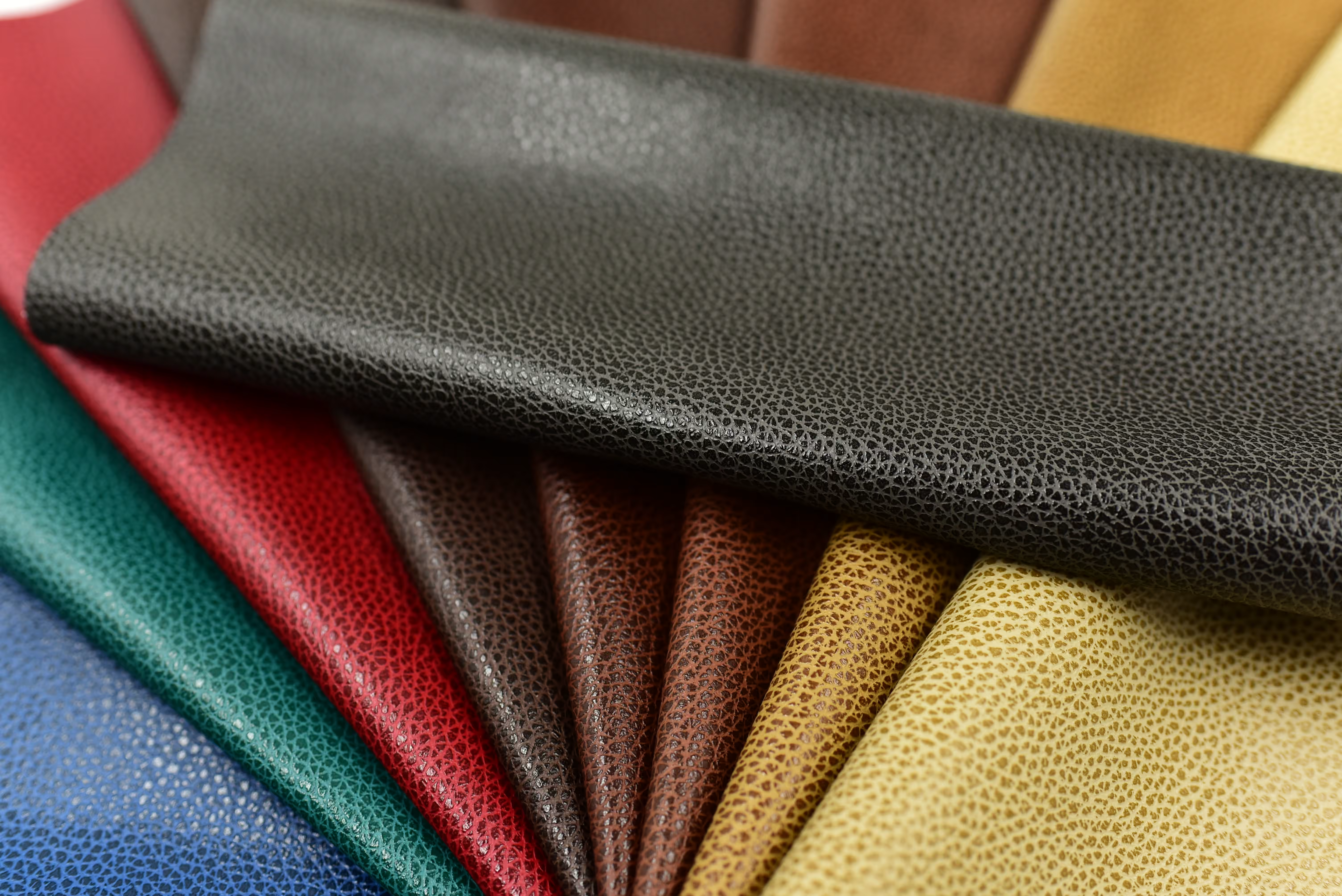
It really comes down to three things: order size, urgency, and budget.
| If you have... | Choose... |
|---|---|
| A large order, no rush | Sea freight (FCL) |
| Low inventory, urgent need | Air freight |
| Samples to send | Courier |
| A small test order | LCL |
There's no single right answer when it comes to shipping. What matters is running the numbers ahead of time — not scrambling to figure it out after something's already gone wrong.
Final Thoughts
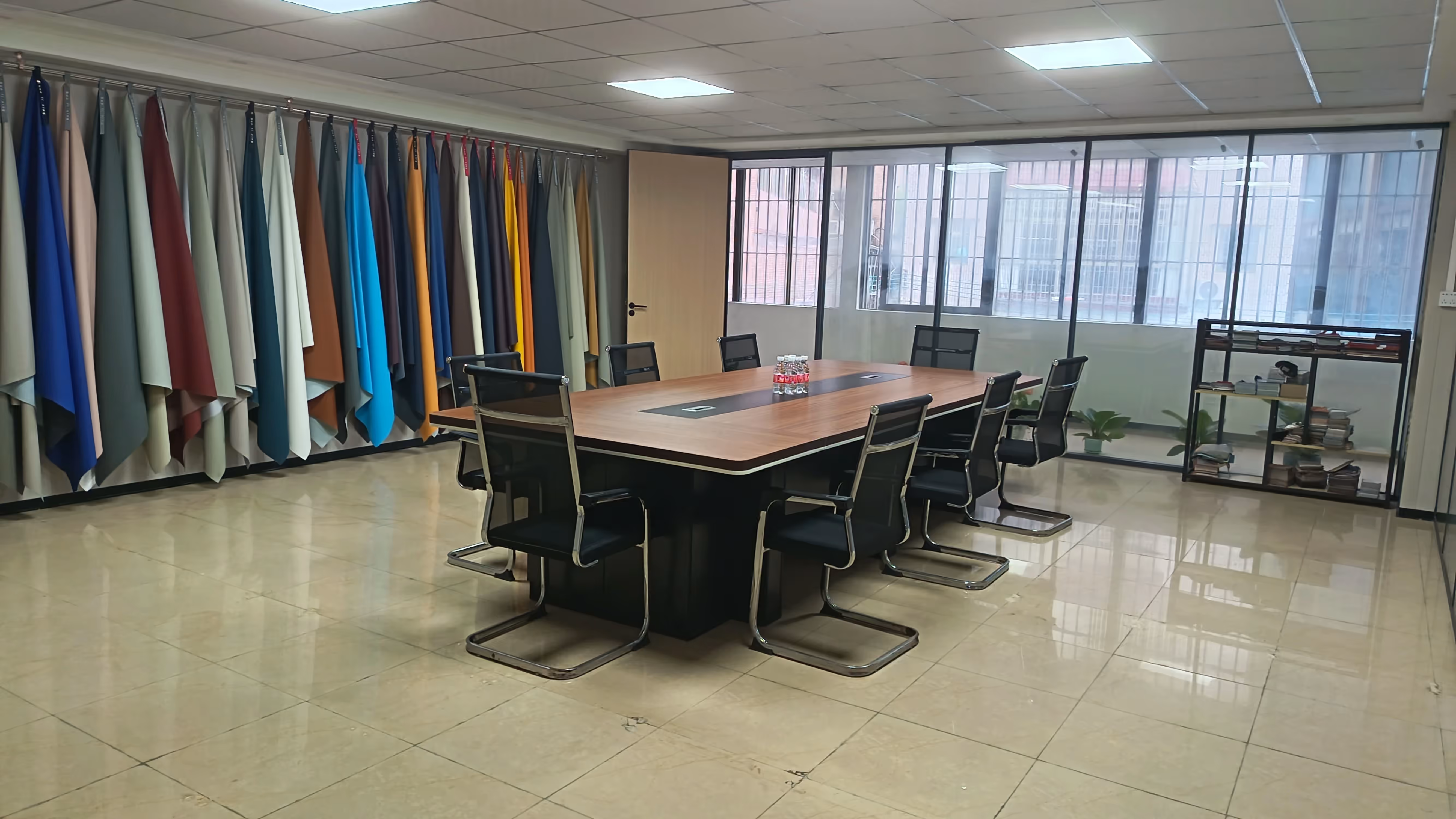
Hualixing New Materials Co., Ltd. is a B2B supplier of a wide range of synthetic and artificial leather. We can make custom products based on your samples. Welcome to contact us for more details.
FAQ
What's the best shipping method for synthetic leather?
It depends on your order size and timeline. Sea freight is the most economical for large orders, air freight is best for urgent restocking, courier works for samples, and LCL suits small test orders that don't fill a full container.
How long does sea freight take for synthetic leather shipments?
Sea freight usually takes 15 to 40 days depending on the destination. Shipments to Europe may take longer right now because of Red Sea tensions, which have pushed many vessels to reroute around the Cape of Good Hope.
Is air freight worth it for synthetic leather?
Air freight costs several times more than sea freight, but it's worth it for emergency restocking or small sample and test-color batches. It typically takes 3 to 7 days, which can save far more in avoided production downtime than it costs.
What is LCL shipping and when should I use it?
LCL (less-than-container-load) shipping is priced by volume and works well for orders too small to fill a container, such as test orders in a new market. It's cheaper than air freight, with transit times close to a full container load, though goods pass through a consolidation warehouse, so there's a slightly higher chance of handling damage.
How should synthetic leather rolls be packaged for export?
A proper export package needs a moisture-proof inner liner as the base layer, thick kraft paper wrapped around the outside, reinforced ends on the roll cores, and export-grade pallets for loading. This matters most for shipments to hot, humid regions like Southeast Asia or Africa, where moisture damage is the most common complaint.
Is rail transport a good option for shipping to Europe?
Yes. The China–Europe Railway Express takes about 15 to 20 days, making it cheaper than air freight and more reliable than sea freight right now, especially with sea freight transit times stretched out by the Cape of Good Hope reroute.
Get a Free Quote
Hualixing New Materials Co., Ltd. is a factory-direct synthetic leather manufacturer with 30 years of manufacturing experience, specializing in OEM/ODM services. We manufacture and supply PVC leather, PU leather, silicone leather & vegan leather for automotive, furniture, upholstery, marine and more. Custom orders are available by yard or meter. Tell us your needs, and we will respond within 24 hours.