Synthetic Leather: A Complete Guide to What It Is, Types, Production, Uses, and Advantages
Table of Contents
Summary: Synthetic leather (also called artificial leather, faux leather, PU leather, PVC leather, or pleather) is made by coating a fabric base with a polymer. The surface is then embossed, colored, and finished to look like leather. No animal skin is used. By coating material, there are five common types: PVC leather, PU leather, microfiber leather, silicone leather, and plant-based leather. Its strengths are low price, steady quality, water resistance, and easy care. Its weak points are poor breathability and, for some products, a short service life.
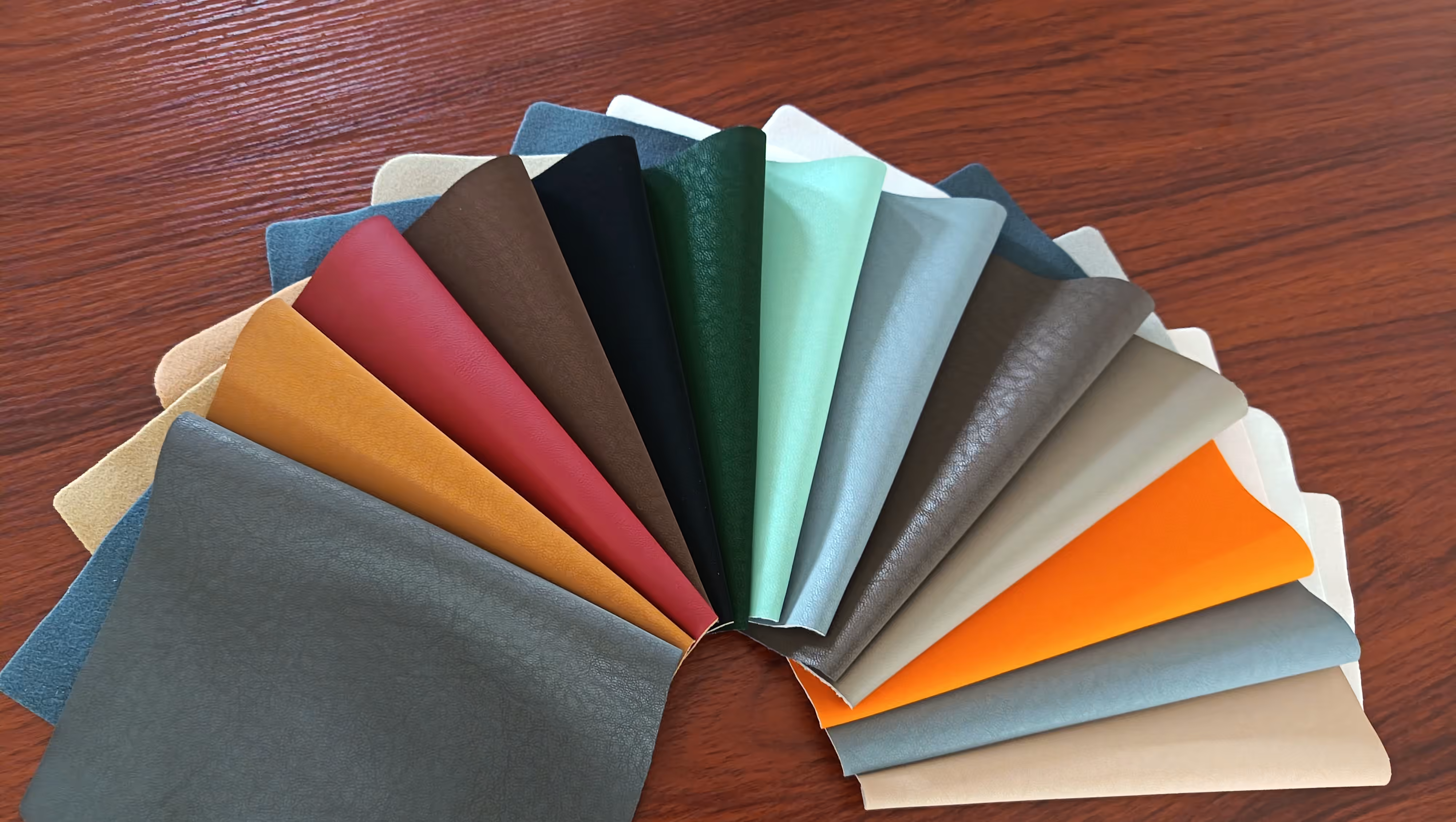
What is synthetic leather ?
If you work in leather sourcing, furniture manufacturing, or automotive interiors, you've probably run into synthetic leather more than once. It goes by a few different names — artificial leather, faux leather, imitation leather, pleather, leatherette,Vegan leather — but they all point to the same idea: a man-made material designed to look and feel like real leather, without using animal hide.
What Is Synthetic Leather Made Of?
Instead of starting with an animal hide, manufacturers apply a polymer coating onto a fabric backing. The result is a flexible surface that can be embossed, colored, printed, and finished to suit all kinds of different products.
Types of Synthetic Leather
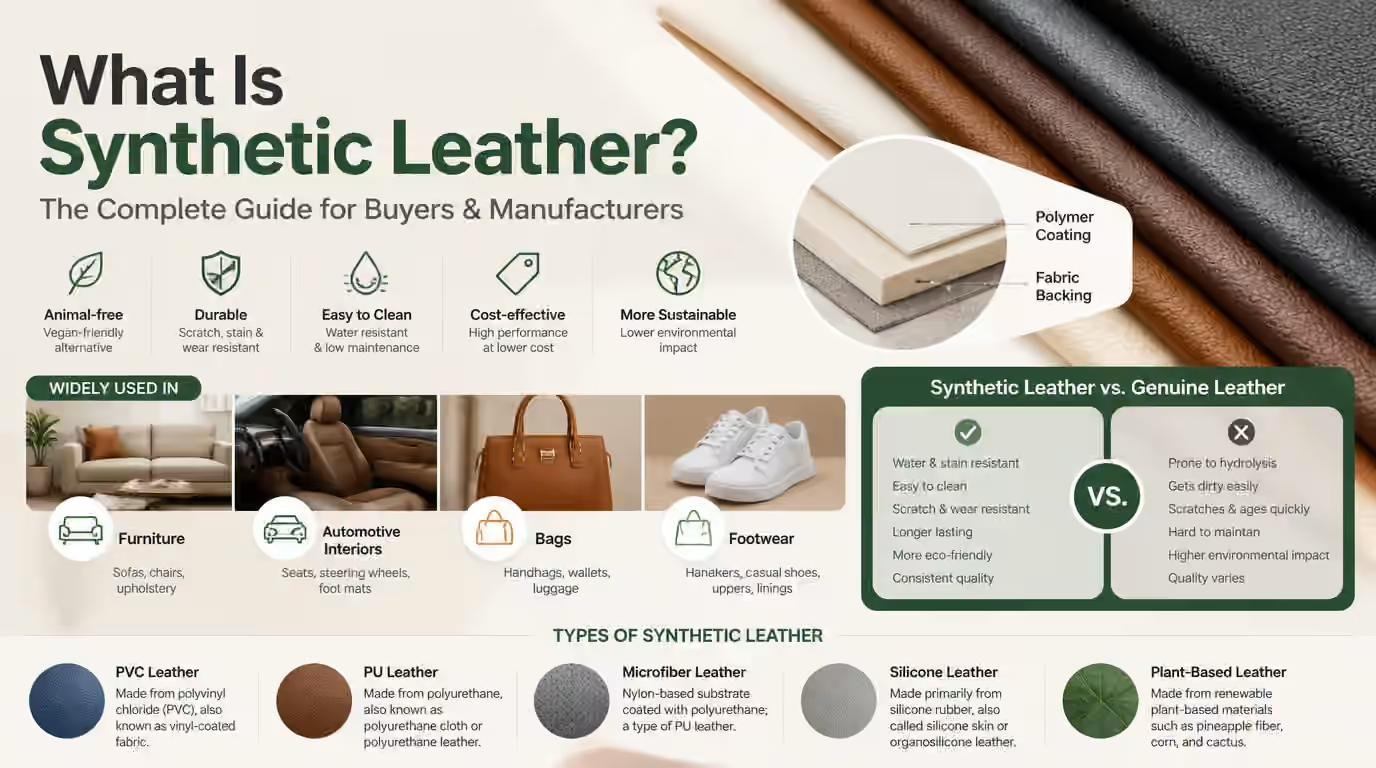
Not all synthetic leather is built the same way. four types come up most often in sourcing conversations.
Not all synthetic leather is built the same way. The following types are most frequently mentioned in procurement discussions.
- PVC Leather — made from polyvinyl chloride (PVC), also known as vinyl cloth or vinyl-coated fabric. Under Regulation (EU) 2018/2005, the content in plasticized material must be below 0.1%.
- PU Leather — made from polyurethane, also known as polyurethane cloth or polyurethane leather. Britannica's article on leather says that from the 1960s, fabrics coated or soaked with PU and PVC became the main kind of artificial leather.
- Microfiber Leather — a nylon-based substrate coated with polyurethane; technically, it's a type of PU leather as well.
- Silicone Leather — made primarily from silicone rubber, also called silicone leather, silicone skin, or organosilicone leather.
- Plant-Based Leather — made from renewable, Plant-based materials such as pineapple fiber, corn, and cactus. Many products pair these materials with a polyurethane or silicone rubber coating, or other finishing technologies. Also known as Plant-based leather or eco-leather.
Advantages of Synthetic Leather Over Real Leather
Before writing this, I collected the points that customers and I talk about again and again. A fair way to put it: synthetic leather is not "better". It is simply a better fit in certain cases.
| Item | Synthetic leather | Real leather |
|---|---|---|
| Price | Lower, and quotes are stable | Higher, and strongly affected by raw hide prices |
| Consistent look | Little color difference between batches; same grain | Every hide is different, with scars and color differences |
| Cutting yield | Sold by the roll; little waste when cutting | Flaws must be avoided, so more waste |
| Water and stain resistance | Good; just wipe it clean | Needs care; water marks easily |
| Colors and patterns | Almost any custom design is possible | Limited by the natural hide |
| Breathability | Poor; the micro-porous structure of PU helps a little | Good |
| Service life | Depends on the type; low-end products easily hydrolyze and peel | Many years with good care |
| Animal welfare | No animals involved | Comes from animal hide |
Britannica also lists lower cost, less labor in production, and animal welfare concerns as reasons for the growing demand for artificial leather.
In my view, the most important thing when choosing is the use. Sofas, dining chairs, and car interiors need large volume, small color difference, and easy cleaning. In these cases, synthetic leather has a clear advantage. For high-end leather goods that need top breathability and a lasting feel, real leather still has its place.
What Is Synthetic Leather Use Of?
🪑Furniture & Upholstery
🚗Automotive Interiors
🚤Marine & Upholstery
👜Fashion & Accessories
📓Stationery & Books
🏥Healthcare Applications
👟Apparel & Footwear
🧳Bags & Cases
🎧Electronics Accessories
Current Situation and Future Trends of Synthetic Leather
Market size: Each organization counts in a different way, so the numbers differ a lot. For example, Grand View Research estimates the global market at about USD 45.5 billion in 2025, and expects it to pass USD 110 billion by 2033. Other organizations give 2025 figures anywhere from over USD 30 billion to over USD 70 billion. When you quote a number, state the source and how it was counted. Do not mix numbers from different reports. What we can be sure of: Asia-Pacific is the biggest market, PU leather has the largest share, and footwear, clothing, and automotive are the main sources of growth.
Here are three trends I think are worth watching in the next few years:
- Stricter environmental rules. The share of solvent-free PU and water-based PU is growing. The limit on DMF is only one sign. Control of substances such as PFAS is also getting tighter.
- Bio-based and recycled materials. Brands ask more and more for "low carbon" and "traceability". But buyers now care more about the real content and third-party testing. Just writing "eco-friendly" is no longer enough.
- Better performance. Resistance to hydrolysis and yellowing, low VOC, and antibacterial features are changing from "nice to have" into basic requirements. Silicone leather and microfiber leather will benefit from this.
Final Note
Synthetic leather is not another word for "fake leather". It is an engineered material designed for specific uses. Choosing the right type, asking about the process, and reading the test reports are much more important than asking whether it looks like real leather. If you are choosing material for a specific project, you are welcome to tell us at Hualixing New Materials Co., Ltd how you will use it, and I can help you narrow down the choices.
FAQ
Q: Are synthetic leather and artificial leather the same thing?
Yes. In daily talk and in purchasing, "synthetic leather", "artificial leather", "imitation leather", and "PU leather" are often used for each other. If we are strict, synthetic leather usually means the finer kind, whose structure is closer to real leather.
Q: Which is better, PU leather or PVC leather?
There is no fixed answer. PU is softer and breathes better, but it usually costs more. PVC is cheaper, more wear-resistant, and more water-resistant. Choose according to your product level and budget.
Q: Will synthetic leather peel?
Yes, especially low-end PU products. The most common cause is hydrolysis. In hot and humid places, some PU coatings slowly age and peel. PVC leather generally does not hydrolyze, and it is also very durable.
Q: Is vegan leather really eco-friendly?
It depends on the formula. The share of plant content, the coating material, and whether it can be recycled decide how eco-friendly it really is.
Get a Free Quote
Hualixing New Materials Co., Ltd. is a factory-direct synthetic leather manufacturer with 30 years of manufacturing experience, specializing in OEM/ODM services. We manufacture and supply PVC leather, PU leather, silicone leather & vegan leather for automotive, furniture, upholstery, marine and more. Custom orders are available by yard or meter. Tell us your needs, and we will respond within 24 hours.